All techniques
Framing & context
The missing base rate
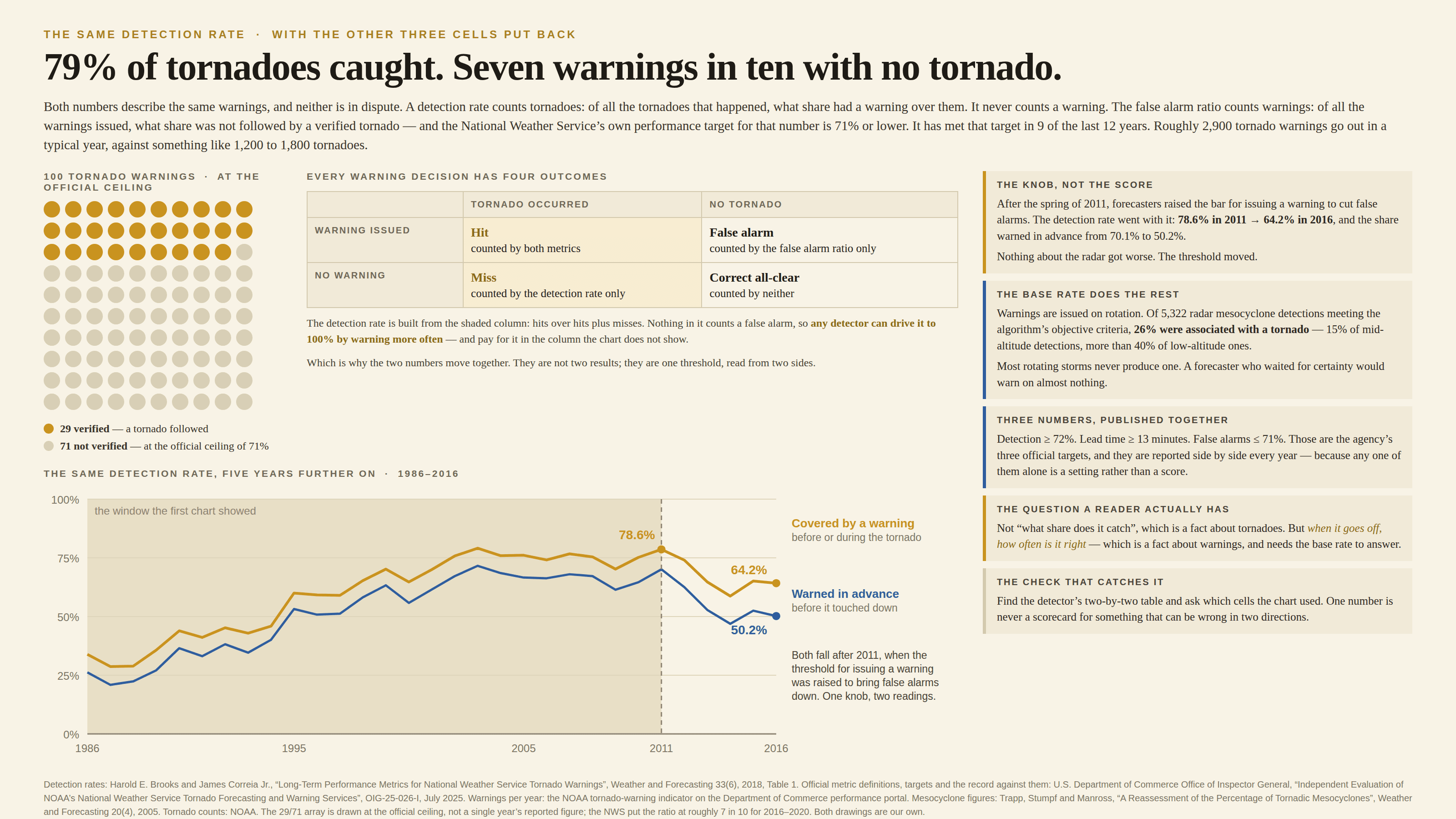
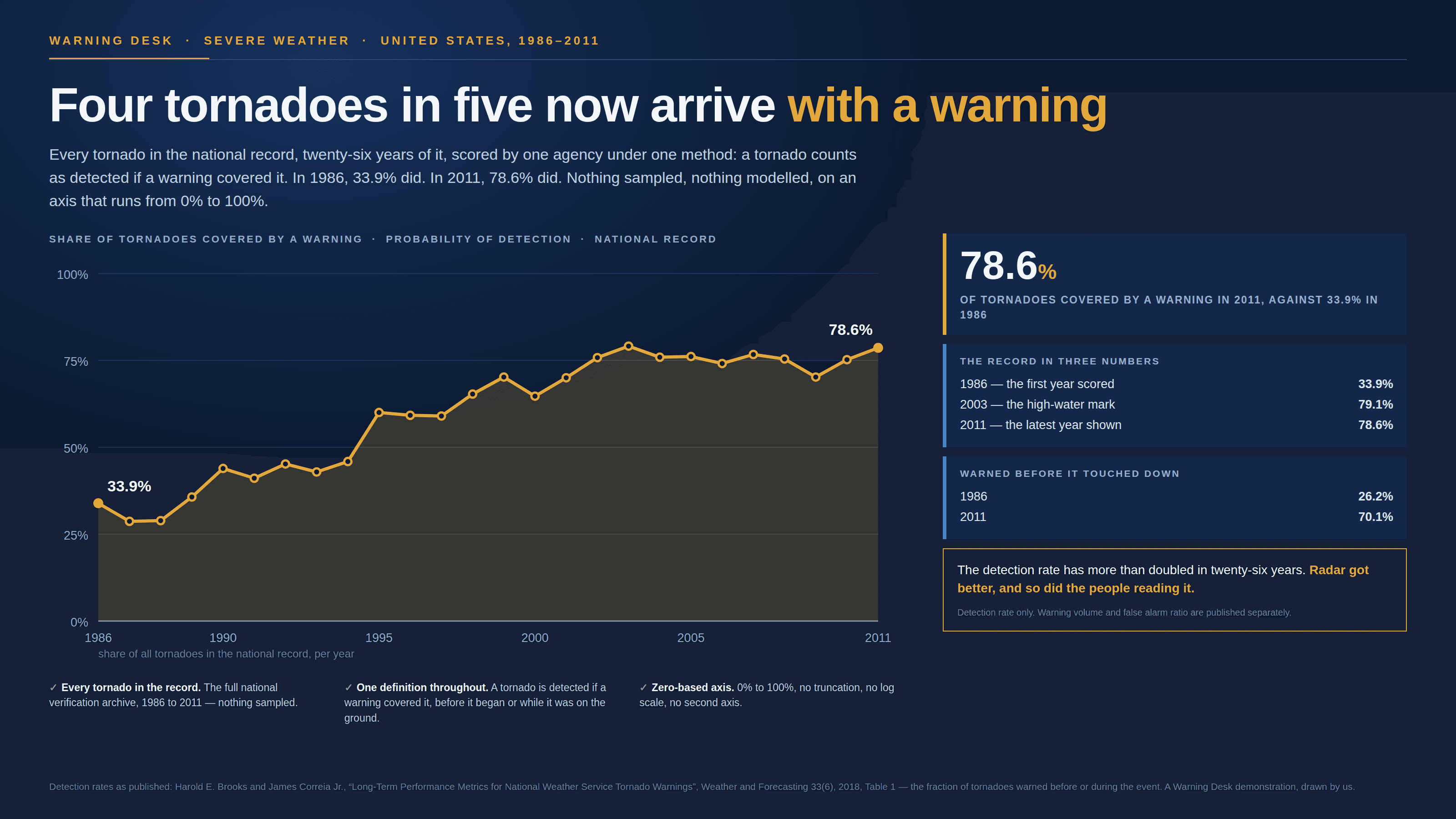
Catches four in five. Wrong seven times in ten. Both are true.
a.k.a. base rate neglect · the false positive paradox · sensitivity without specificity · the half-shown confusion matrix · positive predictive value · detection rate without false alarms
Anything that looks for something — a test, an alarm, a screening rule, a model — produces four outcomes, not one: it fires and the thing is there, it fires and it isn’t, it stays quiet and the thing is there, it stays quiet and it isn’t. A detection rate is built from one column of that table, hits over hits plus misses, and it never counts a single false alarm. So it can be pushed to 100% by firing more often, which makes it a threshold setting rather than a score. How much that costs depends on a number the chart almost never carries: how rare the thing being looked for actually is. Hunt something rare and even a good detector’s alarms are mostly wrong, because there is so much more not-it to be wrong about.
How to spot it
- One number where a detector has four outcomes: hits, misses, false alarms, correct all-clears.
- Read the label. “Detection rate”, “sensitivity”, “accuracy”, “% caught”, “recall” — none of them counts a false alarm.
- Ask how often the thing being detected actually happens. The rarer it is, the more of the alarms are wrong, however good the detector.
- A hit rate with no volume beside it. How many times did it fire to earn that number?
- Two metrics that never appear on the same page. A detection rate that improves in the same year a false-alarm rate worsens is one knob, not two results.
The fix
Show the whole table, or at least both sides of it: what share of the events it caught, and what share of its alarms were right. Neither number means much alone, because moving the threshold trades one for the other — only the pair says whether the detector got better or merely got louder. Put the base rate in the picture rather than the footnote: an icon array of a hundred alarms shows the hits against the false alarms instead of against nothing, and it takes one glance. Then answer the question the reader actually brought, which is rarely “what fraction does it catch” and almost always “when it goes off, how often is it right”. And when the honest answer is that most alarms are false, say so plainly and say why — for a rare event that is arithmetic, not negligence, and a reader who understands it will trust the next alarm more, not less.
In the gallery